
Introduction:
The Rise of Mirror Wall Decor in Modern Homes;
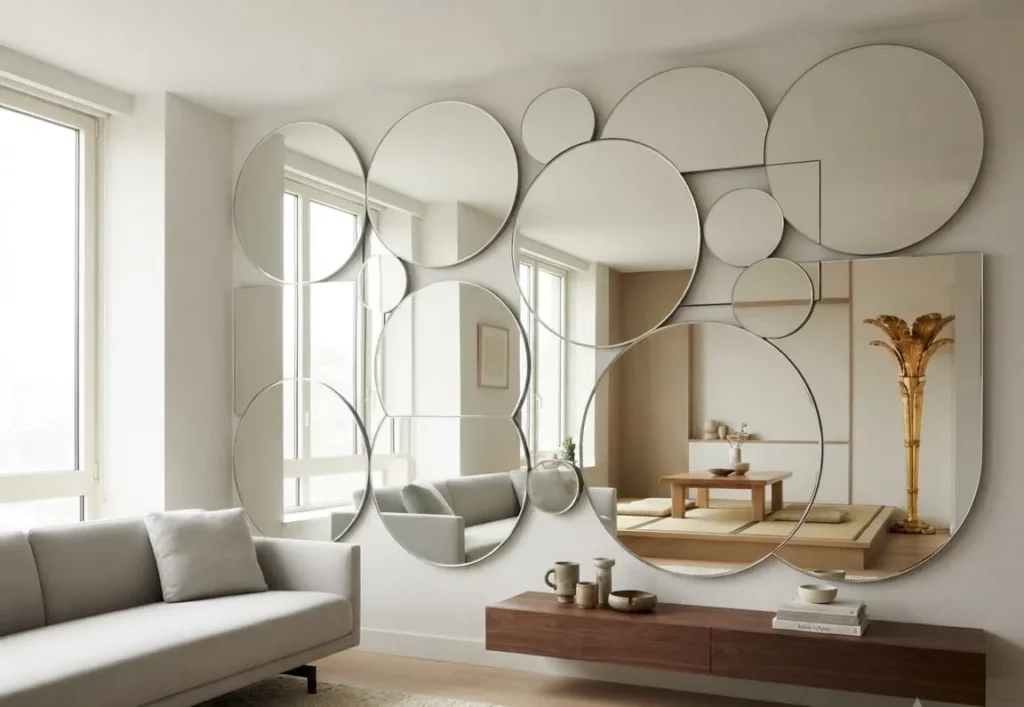
In the ever-evolving world of interior design, few trends have demonstrated the staying power and transformative potential of mirror wall decor. What was once considered a purely functional household item has blossomed into a cornerstone of contemporary home styling, captivating homeowners and designers alike with its unique ability to merge practicality with aesthetic brilliance.
The rise of mirror wall decor reflects a broader shift in how we approach interior spaces. In an era where urban living increasingly means navigating smaller square footage, mirrors have emerged as an ingenious solution to spatial challenges. They possess an almost magical quality the power to dissolve walls, capture and amplify light, and create an atmosphere of openness that transcends the physical boundaries of a room. For residents of compact city apartments, this isn’t merely decorative; it’s transformative.
Consider the psychological impact of a well-placed mirror. Stepping into a room that feels airy, bright, and expansive naturally elevates mood and reduces the claustrophobic tension that can accompany small spaces. This psychological benefit, combined with the sheer visual appeal, has positioned mirror decor as an essential element in the modern home.
But the appeal extends beyond practicality. Today’s mirror designs span an extraordinary range from sleek, frameless panels that whisper minimalist sophistication to ornate, gold-leafed masterpieces that command attention. This versatility ensures that whether your aesthetic leans toward the serene simplicity of Japanese design or the opulent grandeur of Art Deco, there exists a mirror solution waiting to enhance your space.
Interior designers now view mirrors as dynamic design tools rather than mere afterthoughts. Strategic mirror placement can frame a view, create visual symmetry, or even function as a piece of art in its own right. The modern approach to mirror decor treats these reflective surfaces as design elements with equal billing to furniture and artwork a philosophy that has transformed living rooms, hallways, and even kitchens worldwide.
Table of Contents
01.Why Mirror Wall Decor is Popular in Interior Design
The meteoric rise of mirror wall decor in contemporary interior design isn’t accidental it’s the result of a perfect alignment between functional necessity and aesthetic desire. To understand this phenomenon, we must examine the multifaceted appeal that has made mirrors indispensable in the modern home.
The Space Illusion Effect;
Perhaps the most celebrated attribute of mirror wall decor is its remarkable ability to make rooms feel significantly larger than their actual dimensions. This optical illusion works on a fundamental principle: by reflecting the existing space, mirrors create a visual depth that trick the eye into perceiving extended square footage. In cramped urban apartments or narrow hallways, this effect can be nothing short of revolutionary, transforming confined areas into seemingly generous spaces.
The Light Amplification Factor;
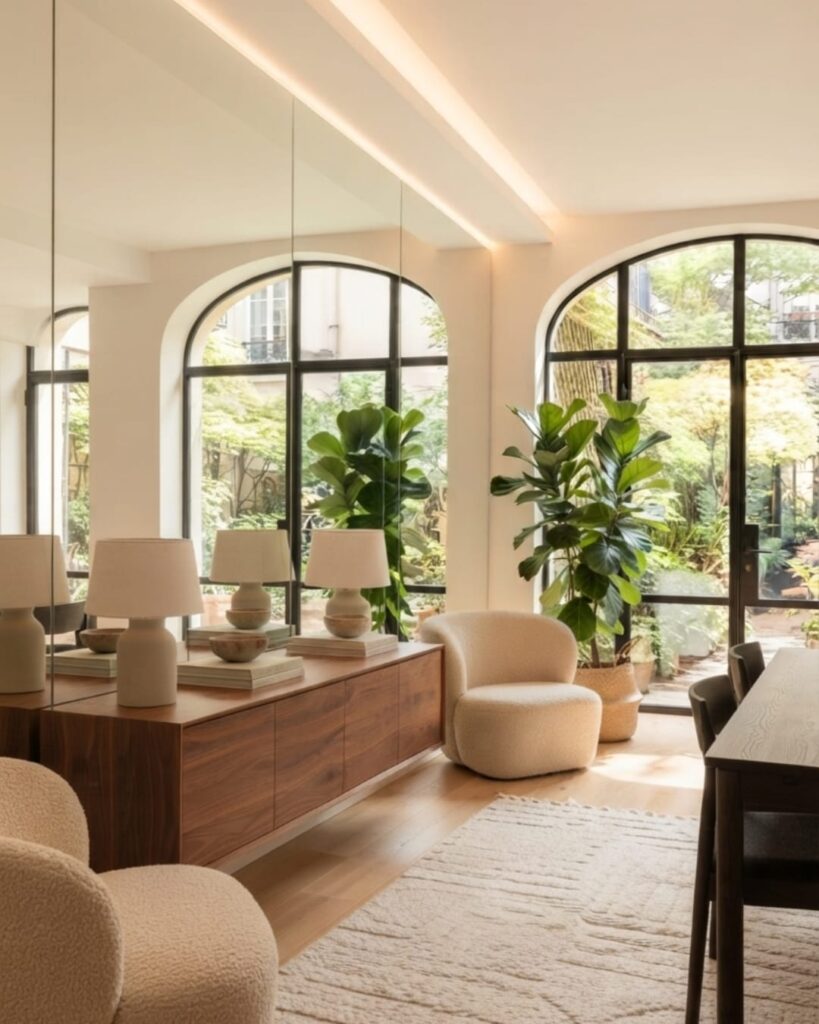
Natural light is one of the most coveted features in interior design, and mirrors serve as powerful light amplifiers. When positioned strategically, they capture sunlight streaming through windows and bounce it throughout the room, effectively illuminating dark corners and reducing the need for artificial lighting during daytime hours. This not only creates a brighter, more welcoming atmosphere but also contributes to energy efficiency a benefit that resonates with environmentally conscious homeowners.
Luxury Without the Price Tag;
There’s an undeniable association between mirrors and luxury, yet achieving a high-end look doesn’t require a high-end budget. A well-placed statement mirror can instantly elevate a room’s perceived value, creating an ambiance of sophistication that rivals expensive architectural features or custom furniture pieces. This democratization of luxury has made mirror wall decor accessible to homeowners across all budget ranges.
Stylistic Chameleon;
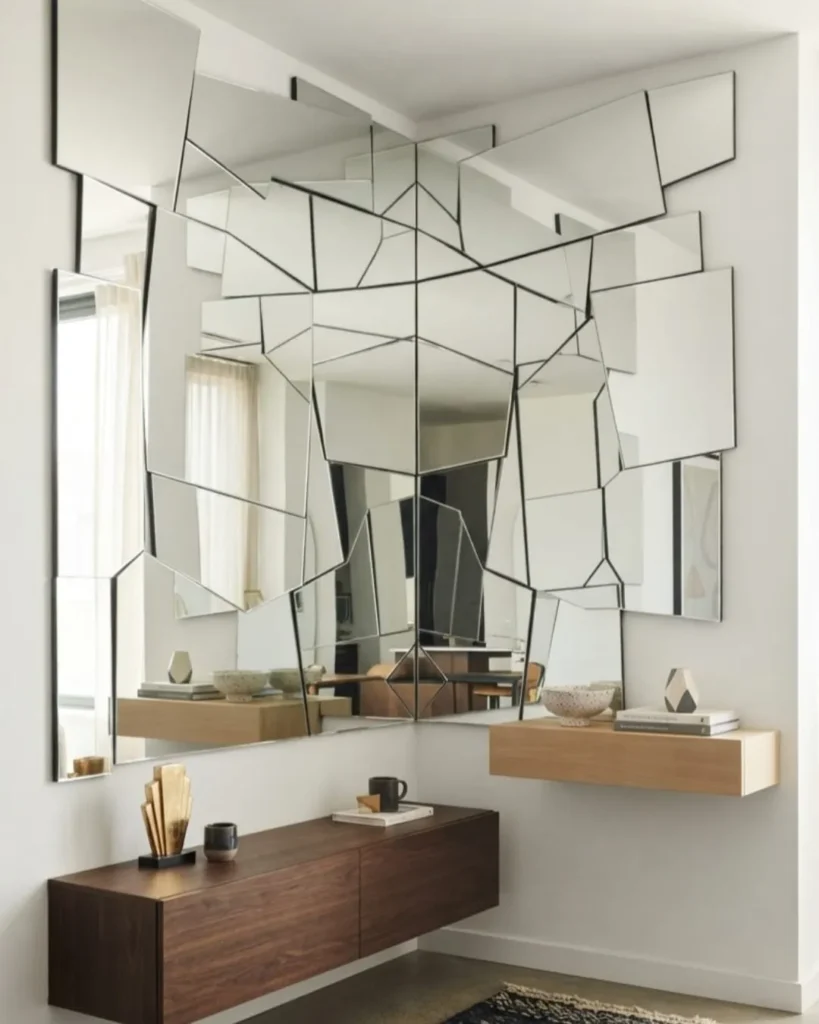
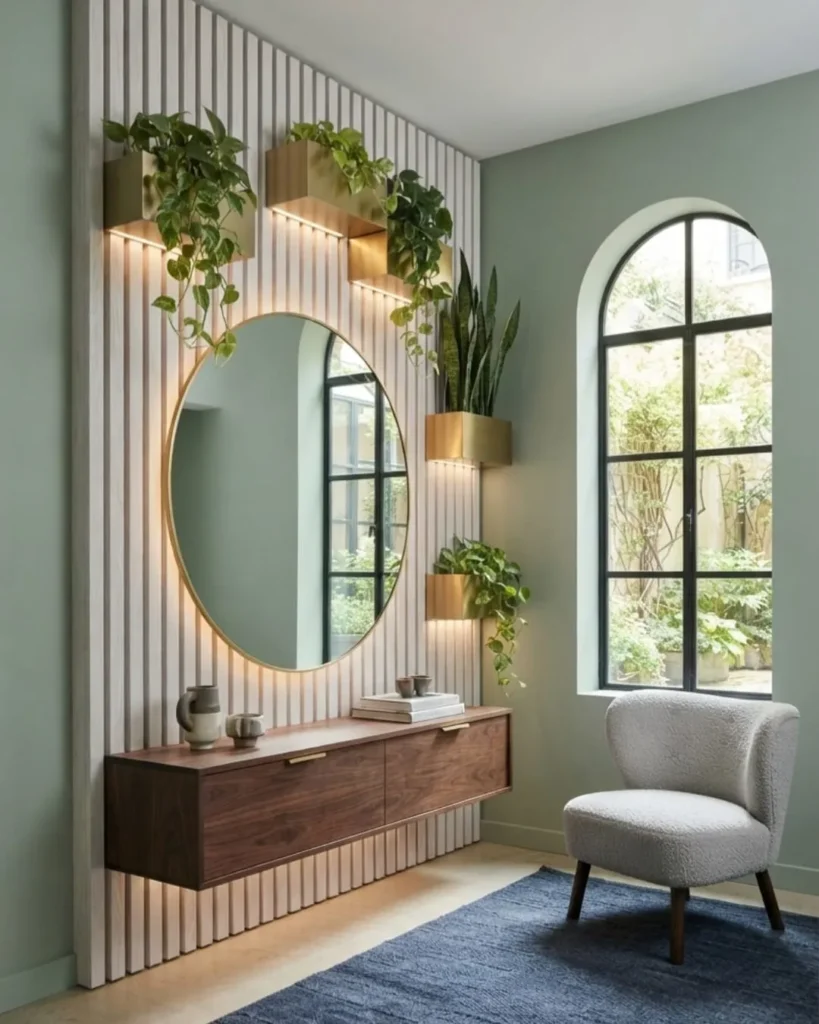
Few decorative elements possess the chameleon-like adaptability of mirrors. Whether your interior style leans toward the clean lines of Scandinavian minimalism, the warm tones of Mediterranean design, the industrial edge of urban lofts, or the ornate details of traditional European aesthetics, mirrors can be selected and positioned to complement rather than compete with your existing decor.
Visual Weight Management;
In interior design, “visual weight” refers to how much attention an element draws. Mirrors offer a unique solution for balancing visual weight in a room. A large, dark furniture piece might dominate a corner, but introducing a mirrored surface nearby can distribute attention more evenly, creating a harmonious visual flow that makes the entire space feel more cohesive.
02.Benefits of Using Mirrors in Home Decoration
Enhances Natural Light;
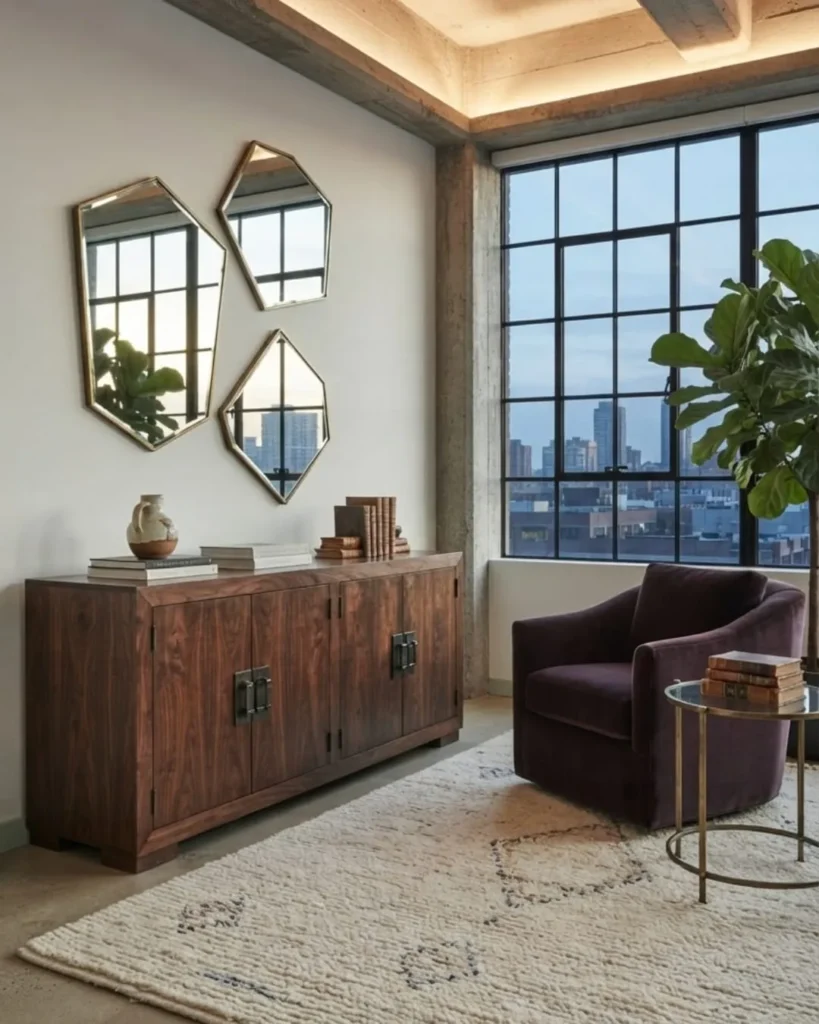
The relationship between mirrors and light is one of interior design’s most powerful partnerships. When sunlight enters a room through windows, mirrors intercept these rays and redirect them, effectively multiplying the light source. This phenomenon can dramatically transform a space dark, shadowy corners suddenly become illuminated; rooms facing north or partially shaded by neighboring buildings feel brighter and more welcoming.
This light-enhancing quality has practical implications beyond mere aesthetics. Well-lit spaces appear cleaner, feel more energizing, and can even positively influence mood and productivity. For home offices or reading nooks, the addition of a strategically placed mirror can significantly improve the quality of available light, reducing eye strain and creating a more pleasant environment for daily activities.
The placement of mirrors relative to light sources requires thoughtful consideration. Positioning a large mirror directly across from a window will capture the maximum amount of natural light. For rooms with multiple windows, mirrors can be placed on adjacent walls to reflect light from different angles, ensuring even illumination throughout the space.
Creates Spacious Effect;
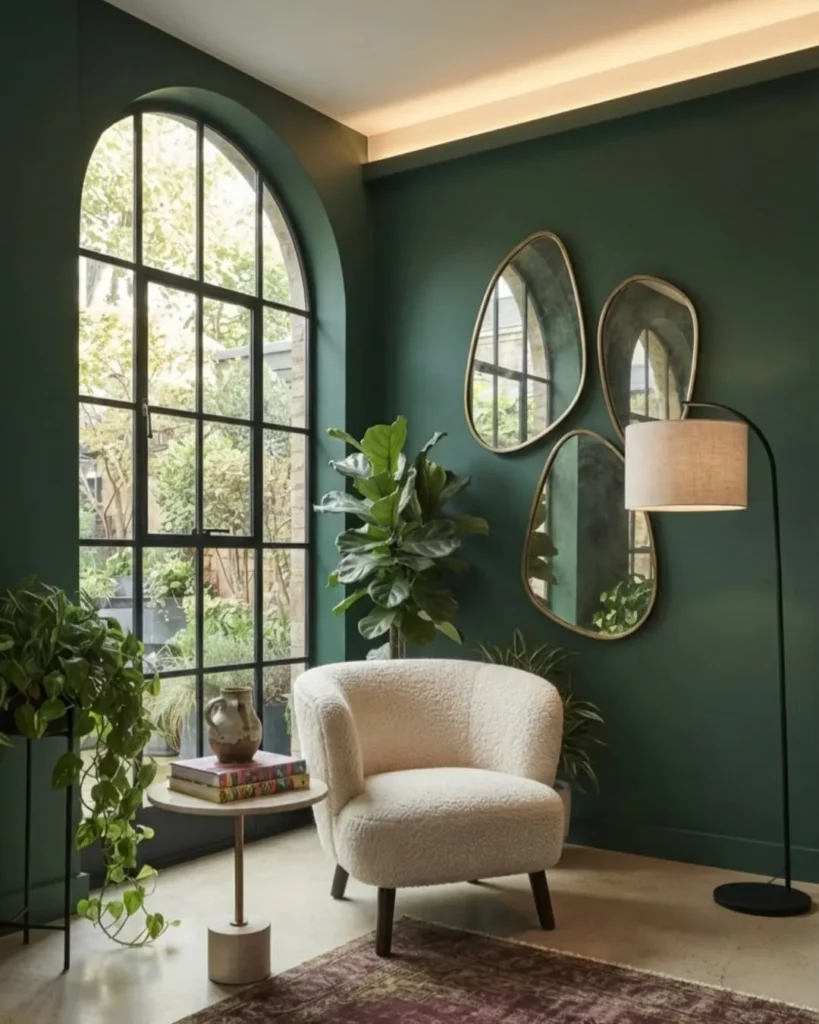
The illusion of spaciousness created by mirrors is perhaps their most celebrated attribute in modern interior design. This effect operates on a simple yet powerful principle: by reflecting the existing environment, mirrors create a visual perception of expanded space that can dramatically alter how we experience a room.
In small rooms, this illusion can be genuinely transformative. A narrow hallway with a full-length mirror appears wider and more inviting. A compact dining area with a mirrored wall feels open and generous. The psychological impact of this perceived space extension cannot be overstated we move more freely, feel less confined, and experience a greater sense of ease in environments that appear larger than their physical dimensions.
The orientation of mirrors influences the spatial effect. Horizontal mirrors tend to make rooms feel wider, while vertical mirrors emphasize height, creating an illusion of taller ceilings. In rooms with lower ceilings, tall, vertical mirrors can elevate the visual perception, making the space feel more grand and open.
Stylish and Versatile;
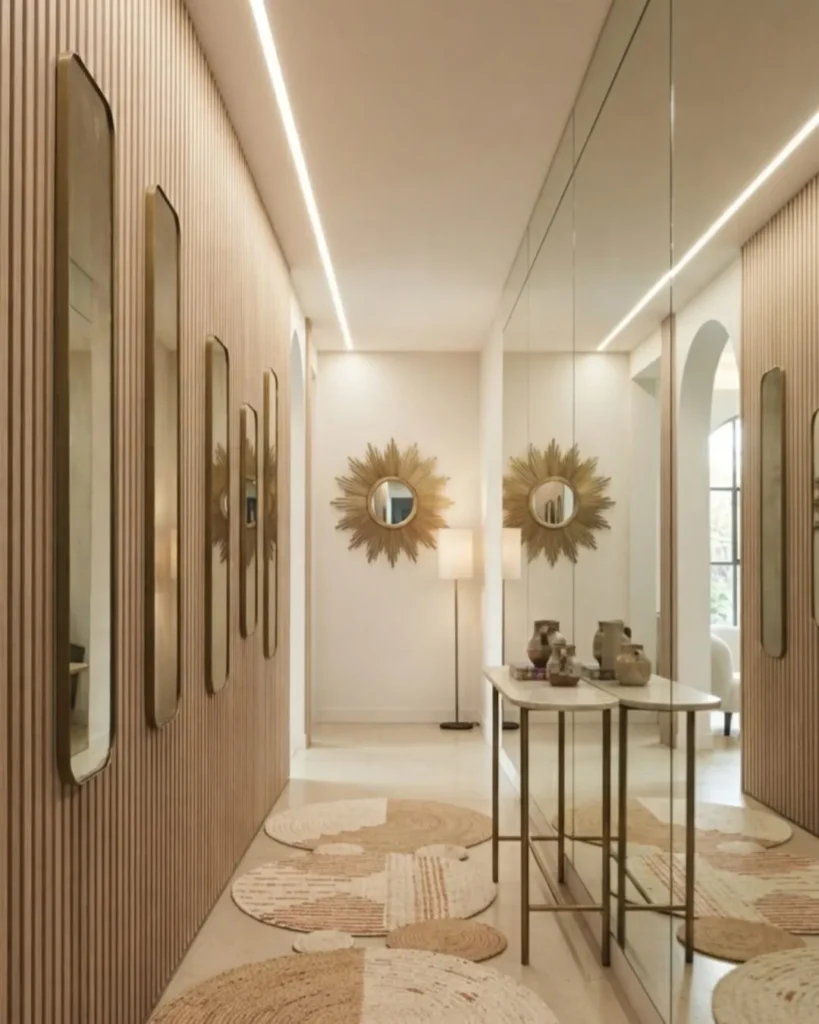
The aesthetic versatility of mirrors positions them as one of the most adaptable decorative elements in interior design. This adaptability stems from the extraordinary range of styles, shapes, and configurations available to modern homeowners.
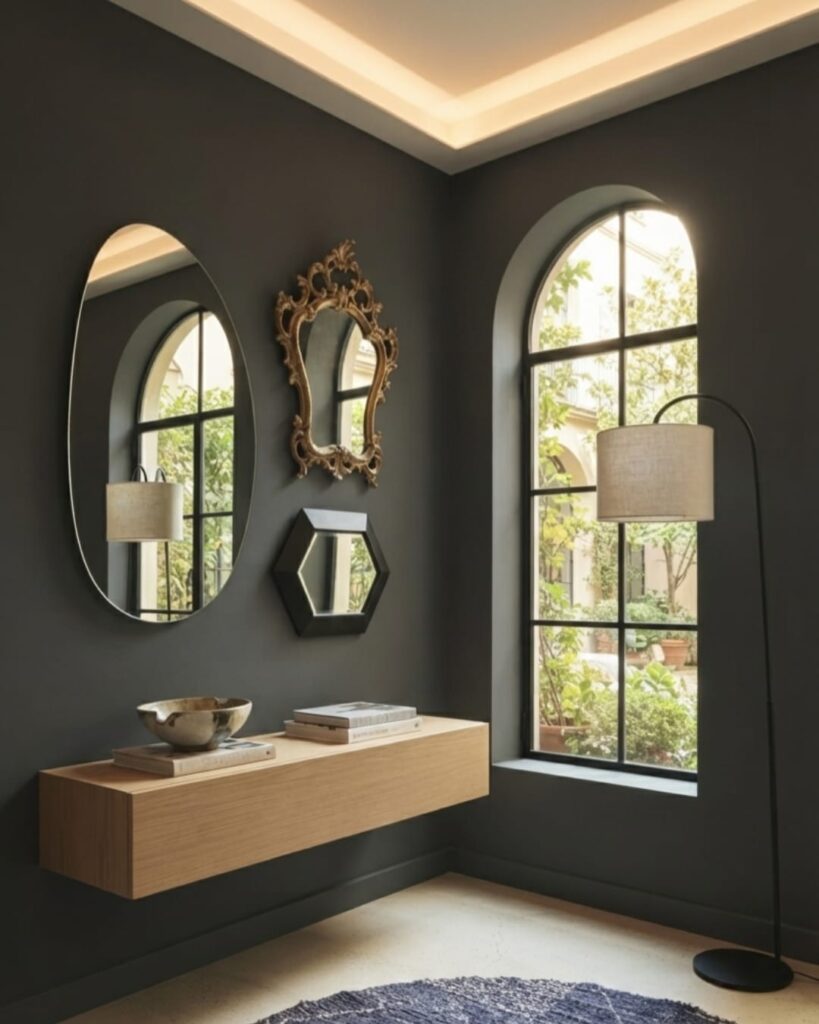
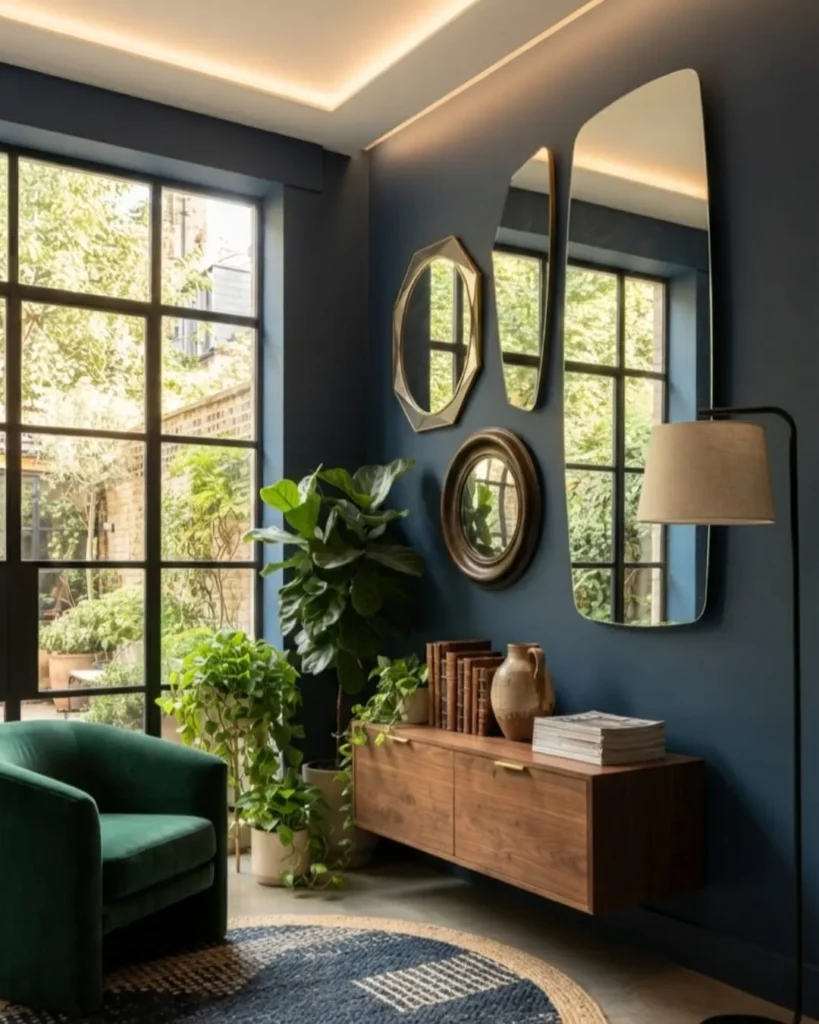
Consider the stylistic possibilities: sleek, frameless mirrors with clean edges complement minimalist and Scandinavian interiors beautifully. Ornate, gilded frames with intricate details enhance traditional and classic spaces. Geometric designs hexagons, arches, or irregular shapes add contemporary artistic flair. Antique reproductions with distressed finishes bring vintage charm and character.
Beyond frame styles, mirrors offer versatility in their application. They can serve as functional items in entryways and bathrooms, artistic focal points in living rooms and dining areas, or subtle background elements that enhance without dominating. This range of applications means mirrors can be incorporated into virtually any room, adapting to the specific needs and aesthetic preferences of the space.
03.Modern Mirror Wall Decor Ideas for Living Rooms
The living room, as the heart of the home, presents the most exciting opportunities for mirror wall decor. This space where families gather, guests are entertained, and daily life unfolds deserves special attention when designing with mirrors.
Behind Sofa Mirror Panels;
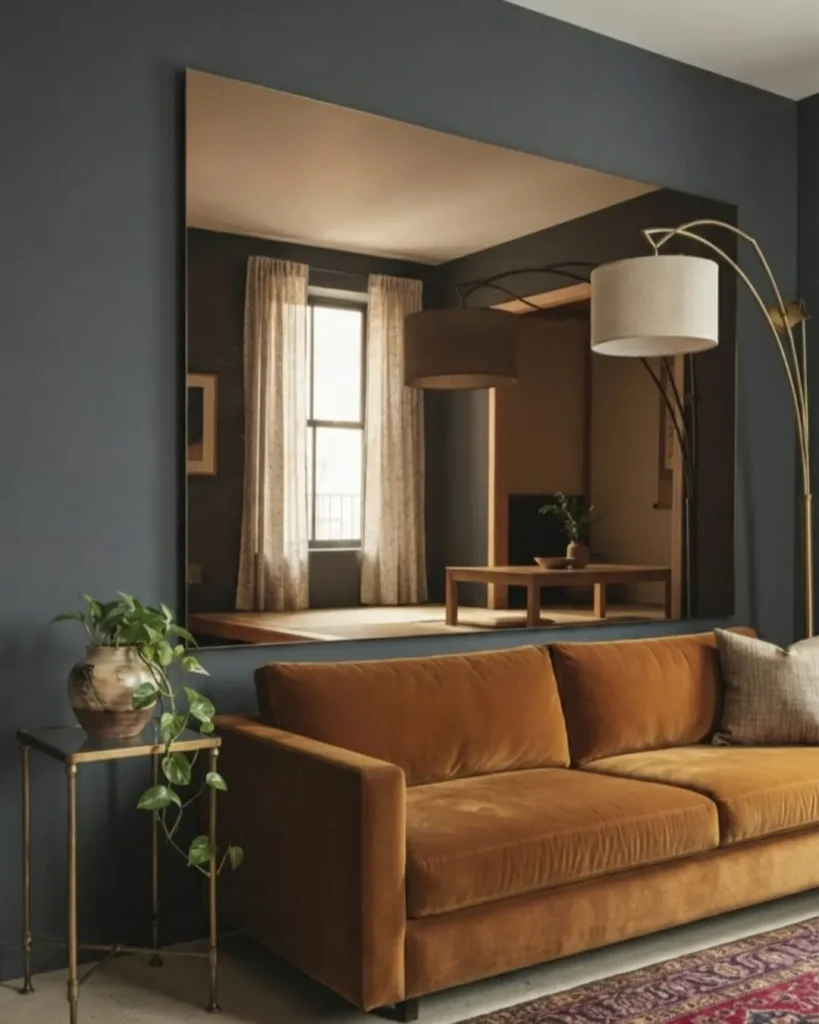
Among the most sophisticated mirror applications in contemporary living rooms is the installation of large panels behind the sofa. This design choice, frequently seen in luxury hotel lobbies and high-end residences, creates a dramatic backdrop that elevates the entire seating area.
The effect is twofold: visually, the mirror panels expand the room’s perceived depth, creating a sense of openness that makes even modest living rooms feel spacious. Functionally, they amplify both natural and artificial light, ensuring the seating area remains bright and welcoming regardless of the time of day.
For this application, scale is crucial. The mirror should ideally be slightly narrower than the sofa and positioned at a height that allows it to reflect the room rather than simply the back of the sofa. A gap of 4-6 inches between the top of the sofa and the bottom of the mirror creates visual breathing room and prevents the arrangement from feeling cramped.
Material choices for behind-sofa installations range from clear mirrored glass for a classic look to tinted or antique mirrors for a more subdued, atmospheric effect. Some homeowners opt for mirror tiles arranged in a grid pattern, which adds texture and visual interest while maintaining the spatial benefits of a single large panel.
TV Wall Mirror Styling;
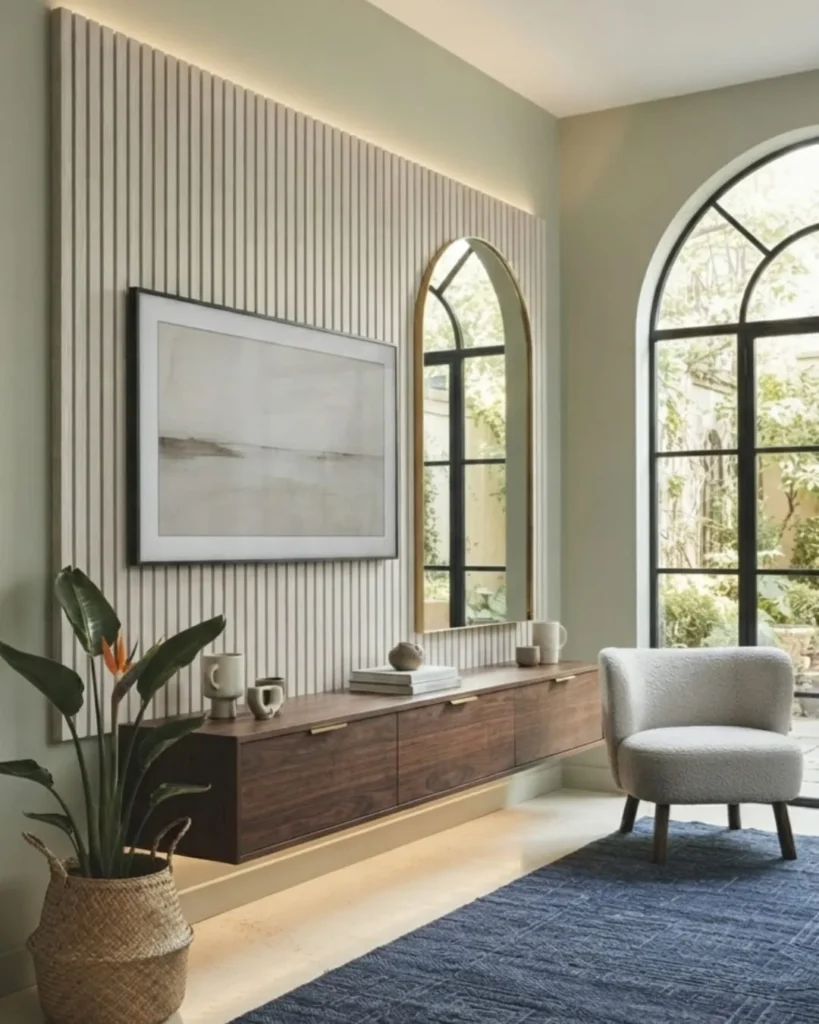
The television wall presents a unique design challenge how to accommodate a large, dark screen without allowing it to dominate the room’s aesthetic. Mirrors offer an elegant solution to this dilemma.
Surrounding a television with mirrored panels creates visual balance, distributing attention across the wall rather than allowing the screen to become the sole focal point. This approach works particularly well when the TV is mounted on a feature wall, with mirrors arranged symmetrically on either side or above the screen.
For a more subtle integration, a single large mirror positioned adjacent to the TV can draw the eye away from the screen during non-viewing hours, ensuring the space maintains its aesthetic appeal when the television is not in use. This strategy is especially effective in open-plan living areas where the living room is visible from dining or kitchen spaces.
The reflective quality of the mirrors also serves a practical purpose: they can capture light from nearby windows or lamps, reducing the contrast between the bright screen and the surrounding wall, which can help minimize eye strain during evening viewing.
Full-Length Statement Mirrors;
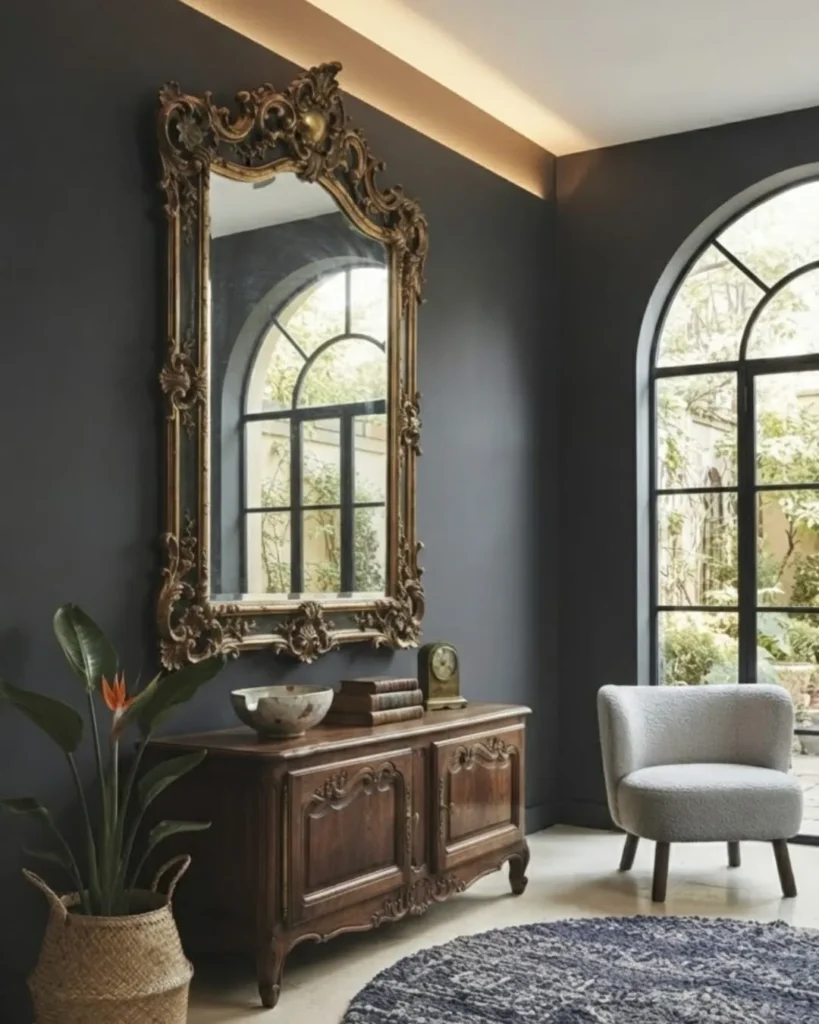
Sometimes, the most impactful design choice is also the simplest. A single, large-format mirror can serve as the defining element of a living room’s decor, creating a focal point that anchors the entire space.
Full-length statement mirrors draw the eye and establish a sense of grandeur. Their generous proportions create a dramatic presence that can transform a plain wall into a feature worthy of attention. When positioned thoughtfully, such mirrors can also serve practical functions, allowing for quick outfit checks before leaving the home.
The frame selection is paramount for statement mirrors. A wide, ornamental frame in a contrasting finish draws attention and creates visual interest; a frameless design offers a modern, gallery-like appearance that emphasizes the reflective surface itself. The choice depends on the overall aesthetic lean toward ornate frames for traditional or eclectic spaces, and clean lines for contemporary or minimalist interiors.
For maximum impact, consider the mirror’s position relative to other elements. A statement mirror placed opposite a window will capture and reflect outdoor views, bringing the outside in. Positioned above a console table or fireplace, it becomes part of a curated vignette that tells a story about the homeowner’s style and personality.
04.Minimalist Mirror Wall Design Concepts
Minimalism, with its emphasis on clean lines, negative space, and purposeful simplicity, aligns beautifully with mirror decor. The reflective quality of mirrors complements the minimalist philosophy perfectly enhancing light and space without cluttering or overwhelming.
Thin Frame Mirrors
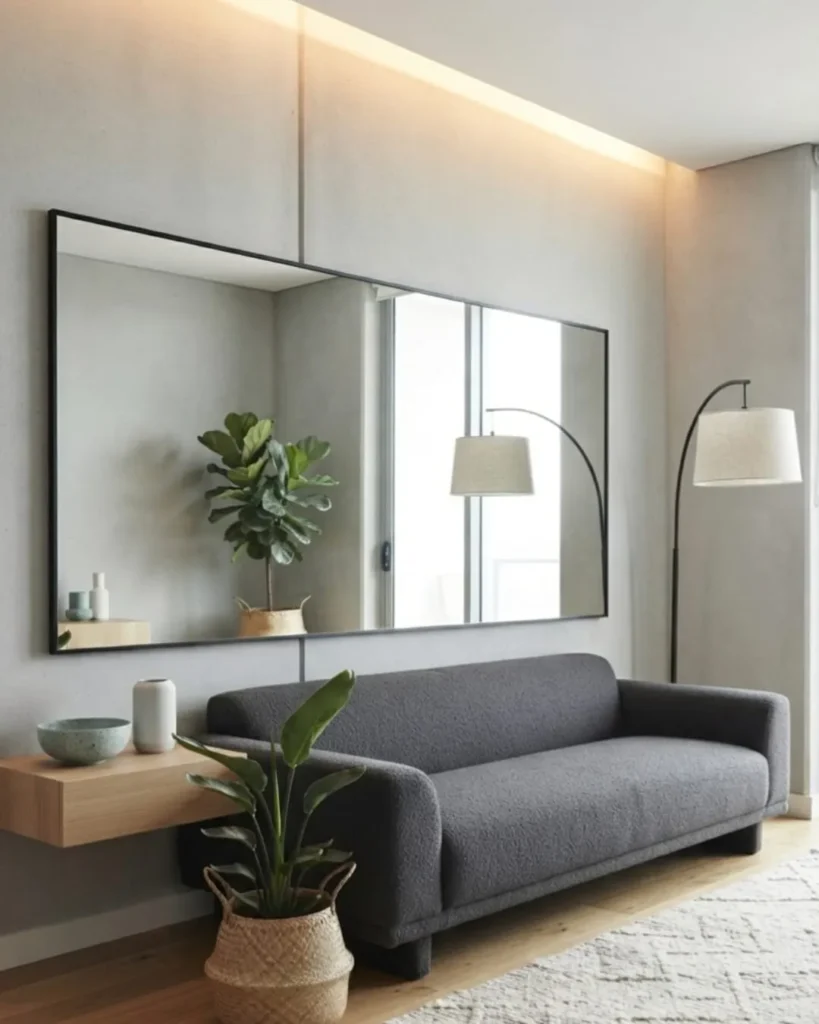
In minimalist interiors, every element serves a purpose, and ornamentation is kept to a minimum. Thin frame mirrors embody this principle perfectly. Their slender borders often in neutral finishes like matte black, white, or natural metal draw minimal attention to themselves, allowing the reflective surface and the space it enhances to take center stage.
The appeal of thin frame mirrors lies in their subtlety. Unlike ornate designs that announce their presence, thin frames whisper elegance, complementing the existing aesthetic without competing for attention. This characteristic makes them ideal for minimalist living rooms, where the goal is a sense of calm and order.
Placement is key to maximizing the impact of thin frame mirrors. Positioned strategically to reflect natural light or capture views, they serve as functional enhancers of space and brightness without becoming decorative distractions. A large, thin-framed mirror placed horizontally above a low sofa can create the illusion of extended space, making the room feel wider and more open.
Grid Mirror Layout
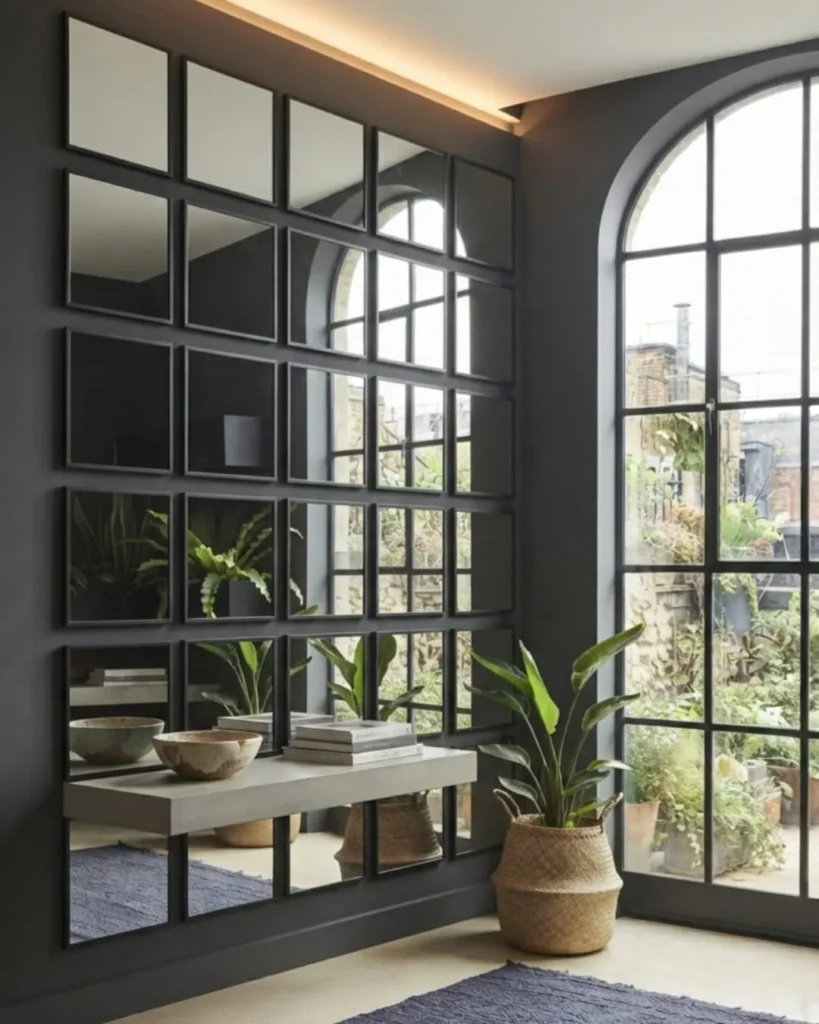
The grid mirror layout offers a contemporary take on mirror decor that resonates strongly with minimalist sensibilities. This approach involves arranging multiple small square mirrors in a regular grid pattern, creating a geometric installation that functions simultaneously as a mirror and as a piece of modern art.
The uniformity of the grid provides a sense of order and regularity that appeals to the minimalist eye. Yet the individual mirror tiles catch light differently depending on their position, creating subtle variations in reflection that add texture and visual interest without disrupting the overall simplicity.
This application works particularly well in spaces where a single large mirror might feel overwhelming or where the wall surface is interrupted by windows or other features. The modular nature of the grid allows for creative configurations that accommodate architectural constraints while maintaining a clean, contemporary aesthetic.
For a more dramatic effect, consider leaving small gaps between the mirror tiles to create a “framed” appearance, with the wall color visible through the spaces. This technique adds visual rhythm and can make the installation feel more architectural than decorative.
05.Luxury Mirror Wall Decor Inspirations
For those seeking to infuse their spaces with opulence and sophistication, luxury mirror designs offer an abundance of inspiration. These are not merely reflective surfaces but statements of style that transform ordinary rooms into extraordinary spaces.
Gold Framed Mirrors;
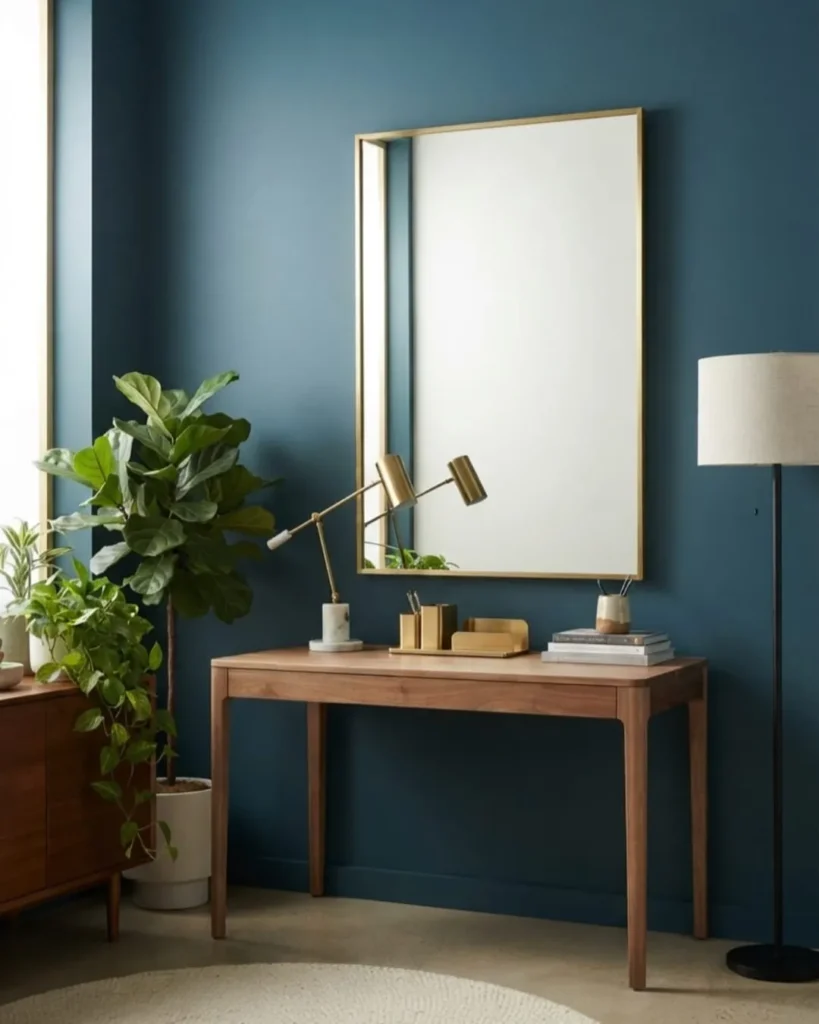
Few design elements evoke luxury quite like gold. When applied to mirror frames, gold creates a sense of warmth and opulence that elevates any space. The precious metal’s reflective quality complements the mirror’s own reflectivity, creating a luminous effect that seems to glow from within.
Modern interpretations of gold framing have moved beyond the ornate, rococo styles of the past. Contemporary gold-framed mirrors feature sleeker profiles and cleaner lines, making them suitable for spaces that blend traditional elegance with modern simplicity. The gold finish may be polished to a high shine for maximum glamour or brushed for a more subdued, sophisticated appearance.
In a living room, a gold-framed mirror placed above a fireplace or console table creates a focal point that anchors the space. The warm tones of the gold can tie together other metallic elements in the room light fixtures, hardware, or accessories creating a cohesive design narrative that feels intentional and refined.
The scale of the mirror relative to the wall is particularly important for luxury installations. A mirror that is too small can feel lost; one that is too large may overpower. As a general guideline, the mirror should occupy roughly two-thirds of the wall width for the most balanced appearance.
Floor-to-Ceiling Mirrors
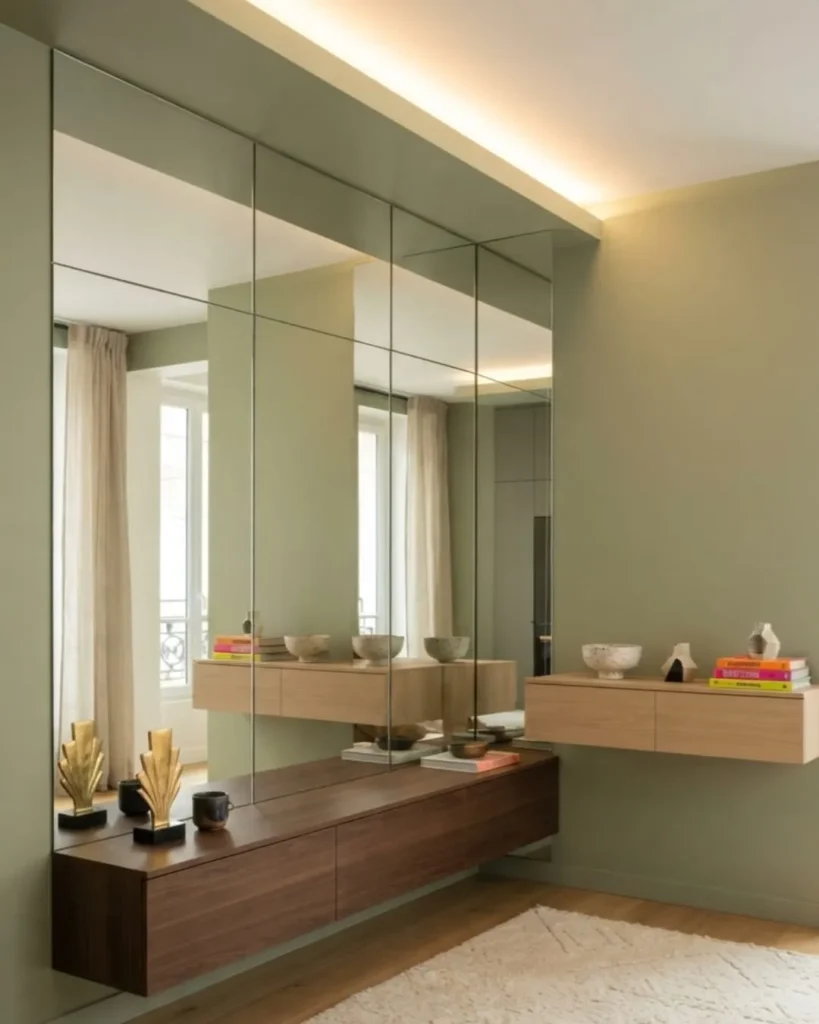
For the ultimate expression of luxury, floor-to-ceiling mirrors deliver an impact that few other design elements can match. This installation style typically found in high-end hotels, boutiques, and the most sophisticated residences creates a sense of drama and grandeur that transforms the perception of the entire space.
The continuous reflective surface from floor to ceiling eliminates visual interruptions, creating a seamless appearance that suggests the room extends far beyond its actual boundaries. This illusion is particularly effective in narrow spaces, where floor-to-ceiling mirrors on one wall can make a cramped hallway or compact living area feel substantially more expansive.
The installation itself requires careful planning and professional execution. The mirrors must be precisely measured, safely secured, and perfectly aligned to achieve the seamless look that defines this luxury application. The absence of visible seams or gaps is essential to the illusion.
While clear mirrors offer the most straightforward reflection, tinted options can add depth and sophistication. Smoked or bronze finishes create a warmer, more subdued reflection that can help integrate the mirror into the room’s color palette, while antique mirrors with their distinctive patina add character and historical depth.
06.Mirror Wall Ideas for Small Spaces
Small spaces present unique design challenges, but they also offer extraordinary opportunities for creative mirror application. In compact rooms, mirrors transcend mere decoration they become essential tools for spatial optimization.
Corner Mirror Placement;
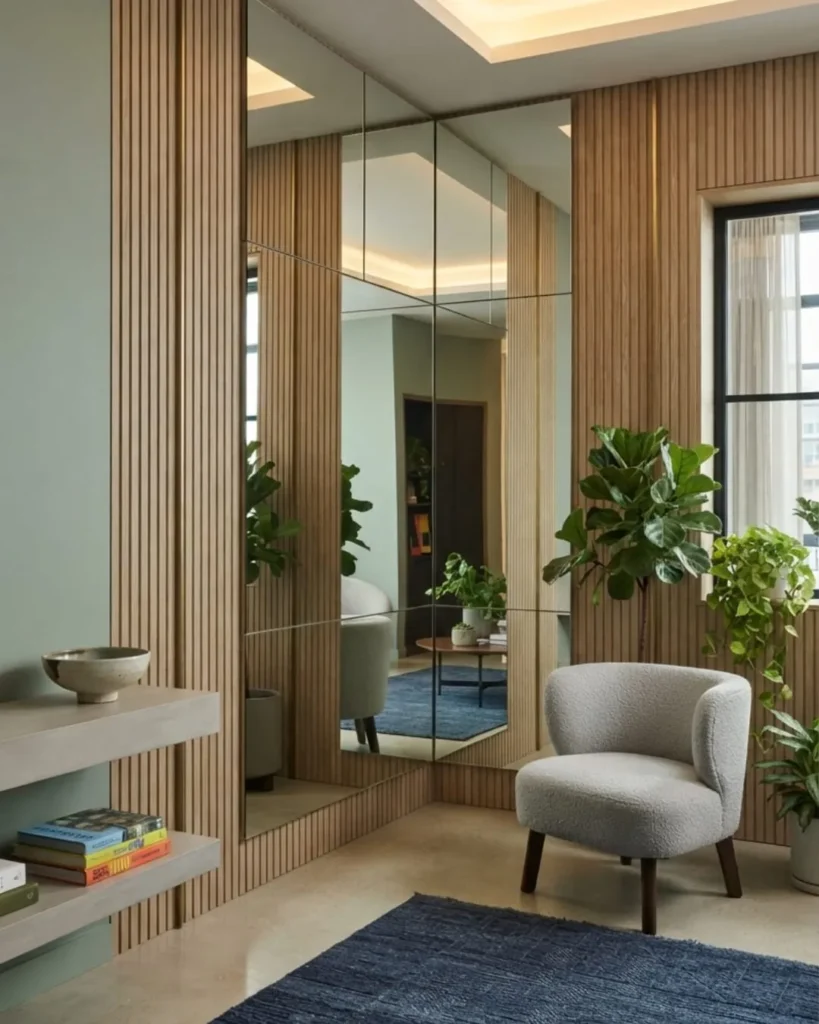
Corners often neglected in interior design present prime opportunities for strategic mirror placement. A corner mirror installation can draw the eye diagonally across a room, extending visual depth and making the space feel larger than its physical dimensions.
The effect is achieved by positioning mirrors on adjacent walls at the corner, creating a continuous reflective surface that seems to eliminate the boundary between the two walls. This “disappearing corner” effect creates the illusion of additional space beyond the room’s actual boundaries, effectively doubling the visual depth of the space.
For maximum impact, consider using large mirrors that extend from floor to ceiling in the corner. The continuous reflection creates a sense of infinite space, as if the room continues indefinitely. This dramatic effect is particularly effective in small dressing areas or entryways, where the combination of mirror and limited square footage can create a surprisingly spacious impression.
Opposite Window Mirrors;
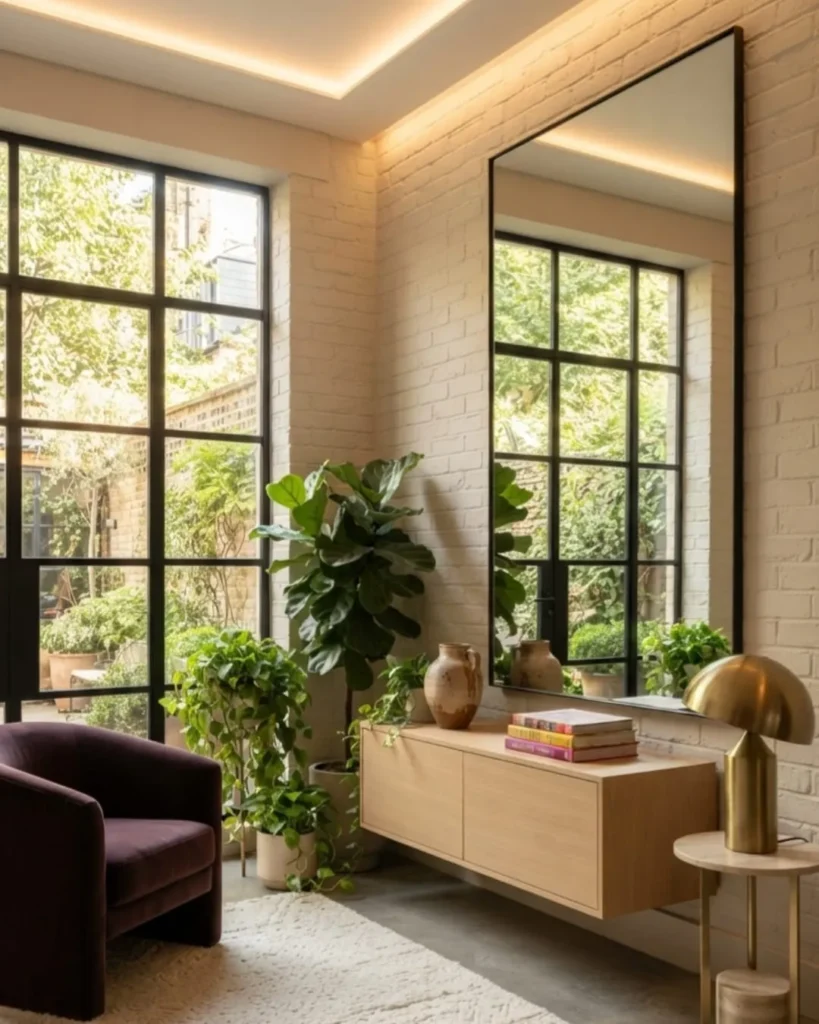
The placement of mirrors opposite windows represents one of the most effective strategies for brightening and enlarging small spaces. This configuration captures the natural light entering through the window and reflects it back into the room, effectively doubling the illumination while creating the illusion of an additional window.
The result is transformative: a dark, cramped room suddenly feels bright and airy. The reflection of the window view whether it’s a city skyline, a garden, or simply a sunny sky brings the outdoors in, expanding the perceived boundaries of the space.
For rooms with limited or no windows, positioning mirrors opposite a light source whether a lamp, sconce, or pendant light can create a similar effect. The reflected light fills the room, reducing shadows and creating a more welcoming atmosphere that belies the room’s actual dimensions.
The size of the mirror relative to the window is worth consideration. A mirror that is approximately the same size as the window will create the most convincing illusion, though smaller mirrors can also be effective when positioned thoughtfully.
Conclusion
Mirror wall decor has evolved from a purely functional necessity to a sophisticated design element that can transform the character, ambiance, and perceived dimensions of any space. From the elegant simplicity of thin-framed minimalist installations to the dramatic impact of floor-to-ceiling luxury applications, the possibilities for creative mirror integration are limited only by imagination.
The key to successful mirror decor lies in thoughtful consideration of placement, proportion, and purpose. A mirror positioned to capture and reflect natural light serves a different function than one designed to create a focal point or expand perceived space. Understanding these differences allows homeowners to select mirror solutions that address specific needs while enhancing overall aesthetic appeal.
As we continue to seek ways to make our homes more comfortable, more beautiful, and more functional, mirrors will undoubtedly remain essential tools in the designer’s toolkit. Their unique ability to combine practical benefits with aesthetic versatility ensures that mirror wall decor will continue to inspire homeowners and designers for generations to come.